Thomas Jefferson and July 4
By Joe Stinnett
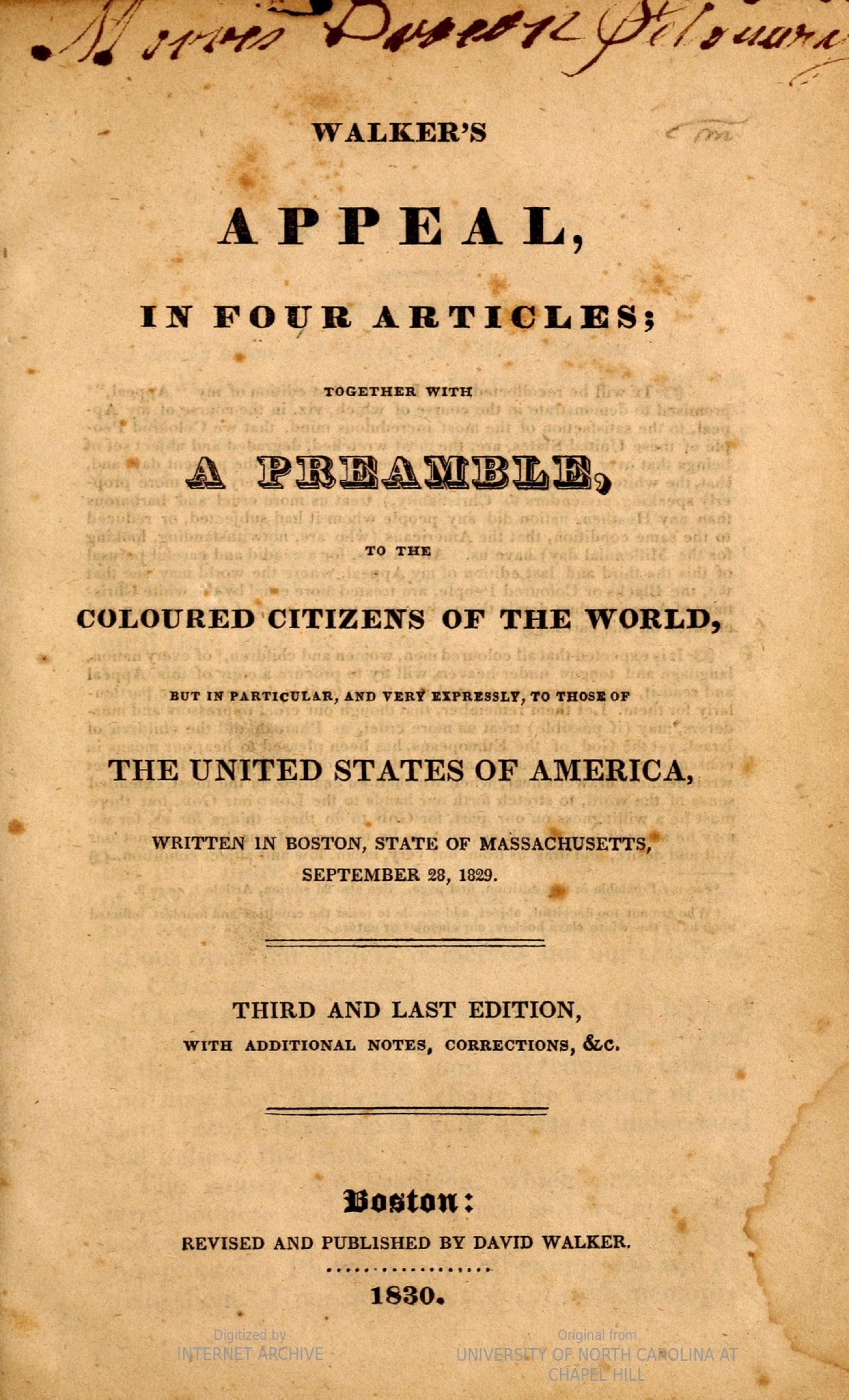
Despite sending mixed messages on slavery, Thomas Jefferson, third president of the U.S. and author of the Declaration of Independence, could not maintain his Monticello lifestyle without it and owned a second slave plantation surrounding his retreat, Poplar Forest, just outside Lynchburg. A free Boston man, David Walker, targeted Jefferson, who died on July 4, 1826, in a powerful pamphlet that reads like it could have been written yesterday instead of 1829.
Citing Jefferson in his Notes on the State of Virginia, that Black people were inferior to the white people both mind and body, Walker wrote “Mr. Jefferson … has in truth injured us more, and has been as great a barrier to our emancipation as anything that has ever been advanced against it.” Walker’s Appeal … to Coloured Citizens of the World mentioned the third president repeatedly and predicted that because Jefferson was so universally respected his ideas would far outlive those of most men.
Walker derided the colonization movement, saying that despite the words of its proponents, its actual purpose was to “get the free people of color away to Africa, from among the slaves,” leaving the enslaved “to rest in ignorance and wretchedness.” He continued, “tell us now no more about colonization, for America is as much our country as it is yours. — Treat us like men, and there is no danger but we will all live in peace and happiness together. For we are not like you, hardhearted, unmerciful, and unforgiving.” He said the barbarity of Christian slavery in Virginia and other states was unparalleled in the annals of heathens or devils or Sodom and Gomorrah. The essay was so incendiary that even an abolitionist group declined to reprint it years later.